
Reception: May 1, 6-9 pm
Artist Talk: May 2, 1-2 pm
Exhibition Statement / Déclaration D’Exposition / 展覽資料
This series of work is focused on my Taiwanese family roots, and how Truth and Reconciliation has impacted the Taiwanese diaspora in Canada. As a Taiwanese Canadian, I am both a recipient and an immigrant settler to the challenges of Truth and Reconciliation in both nations.
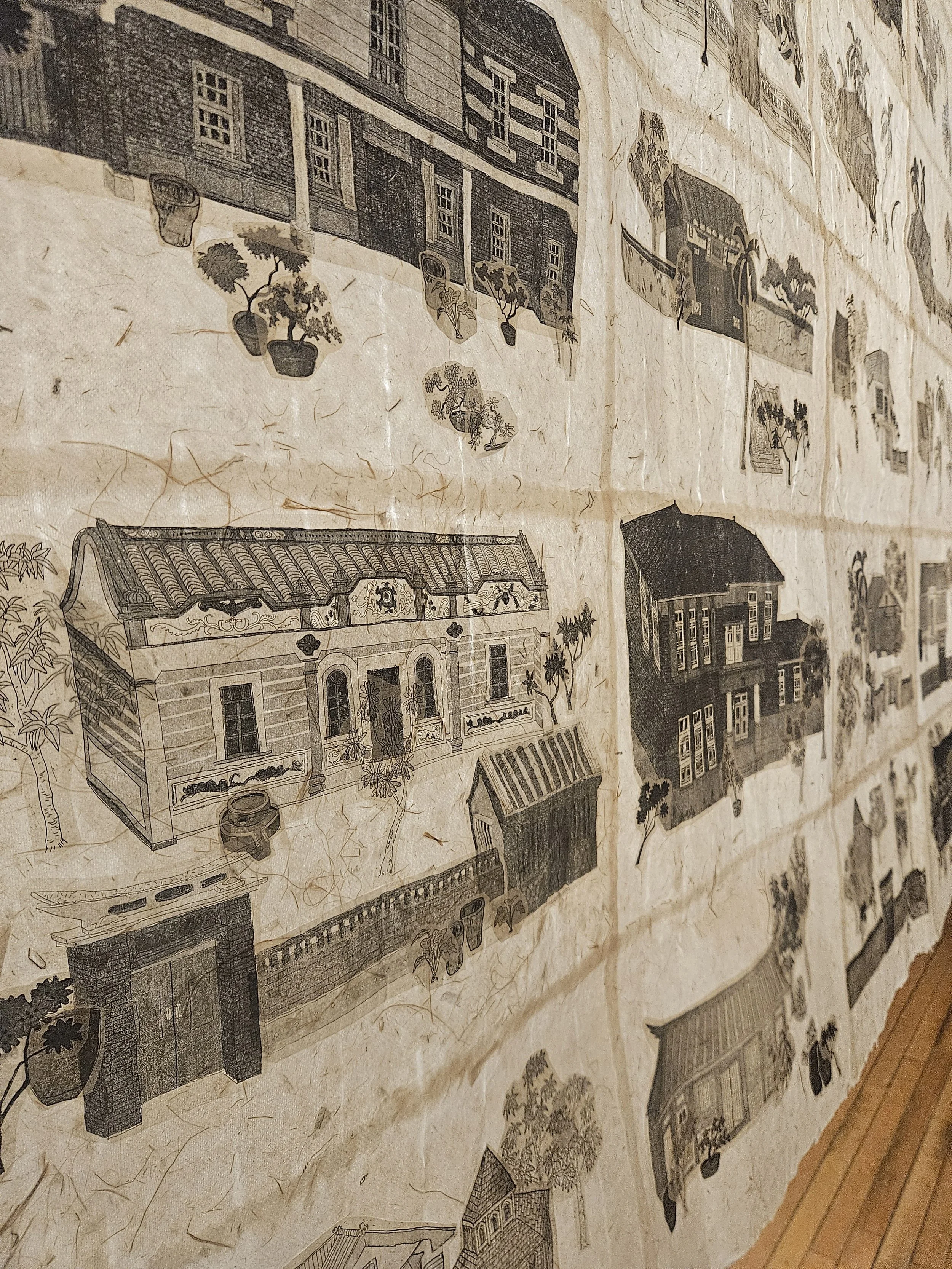
My personal connection began with reading of a 2017 New York Times article, detailing the opening of the 228 Memorial Museum in Taipei, Taiwan. & “288” references the date, February 28th, 1947 – the day a democracy protest ended with a public massacre committed by the authoritarian KMT government. It marked the beginning of the 50-plus-year martial-law dictatorial rule, known as the “White Terror”, which citizens were oppressed with acts of imprisonment, torture, and execution. The population called the mass arrests, “Thought Crimes”, prosecutions without trials and due process. Following decades of human rights activism in Taiwan and abroad (Canada), the regime gradually ended with the first UN-sanctioned election in 1992. The 228 Memorial Museum documents this history with photos and letters from the victims and their descendants.
As a Taiwanese Canadian, I find myself in a unique position to engage with Truth and Reconciliation as an immigrant and a recipient of both lands. Canada continues to be a sanctuary for many diaspora communities while supporting democratic movements in their homelands. At the same time, Canada struggles to address the systemic human rights violations against its own First Nations people and other marginalized communities. Many of our immigrant community members have knowledge and experience with the challenges of democratic activism. There is a trove of tools and knowledge we can learn from others’ struggles. I believe this is an opportunity for each of us to look beyond our peripheral view.
Français
Cette œuvre traite de la vérité et de la réconciliation, mais aussi de décolonisation dans le contexte Taïwanais. Durant le régime dictatorial de la « terreur blanche », des citoyens ont été emprisonnés sans mandat, pour ce que l’on appelle un crime d’opinion. En 1947 un massacre de militantes prodémocratie qui marque le début d’un régime dictatorial violent à Taiwan. Je souhaite que cette œuvre reflète l’expérience de ma famille et de la communauté taïwanaise au Canada et à l’étranger. L’installation cultive la mémoire collective d’une communauté qui a été détruite, mais jamais oubliée. Depuis des décennies, la diaspora Taïwanaise considère le Canada comme un sanctuaire pour faire la promotion de la démocratie dans leur pays d’origine.
Par projet, je trouve sa force dans la cohabitation de la mémoire collective et individuelle; mais aussi de la tradition et de l’exploration. En développant une expertise en fabrication de papier, l’artiste est en mesure d’intégrer des plantes indigènes du Canada – les ammophiles et le sapin douglas, notamment – étageant et tissant les fibres des territoires qu’il habite et qui l’habitent; créant une maison de papier pour accueillir des réflexions nouvelles sur la décolonisation et la guérison. Cette mémoire apparait sur la pulpe à travers la représentation d’une architecture taiwanaise liée à la dépossession, mais aussi à travers une repossession de son récit familial dans certains lieux de création qu’il insère dans sa vaste tapisserie.
Je souhaite que les personnes survivantes qui y habitent, et qui ont longtemps vécu de la honte face à cette mémoire, puissent trouver de la paix et un espace pour abriter la parole.
Traditional-Chinese
這部作品著重於我的台灣家族根源,以及真相與和解如何影響散居在加拿大的台灣人。 自2023年以來,我在研究受到台灣真相與和解委員會影響的台灣加拿大與美國移民社群。 這是我持續研究目前或曾經活躍於國內外人權運動的台灣移民社群成員的成果。我個人的連結始於閱讀一篇2017年紐約時報的文章,詳細介紹二二八紀念館的開幕。「二二八」指的是1947年二月二十八日這一天一場民主抗爭以國民黨威權政府的公開屠殺而告終。這標誌著40多年戒嚴獨裁統治的開始,被稱為「白色恐怖」,其間公民受到監禁、酷刑和死刑的壓迫。人民將這些大規模的逮捕行動戲稱為「思想罪」,即沒有經過審判和程序的起訴。 經過台灣和國外(如加拿大)數十年的人權運動,該政權隨著1992年第一次聯合國認可的選舉而逐漸結束。二二八紀念館以受害者及其後人的照片和信件記錄了這段歷史。在博物館的照片中,有一位被處決的記者,他的姓是我的家族姓氏,來自我的家鄉林邊鄉。我諮詢了家族成員,確認他就是我的宏親阮朝日。從這段情感旅程中,我致力於進一步檢視這段殖民歷史,並成為台灣人民自治的倡導者。 我九歲時,由於在台灣演進為民主國家的過程中,來自中國的導彈威脅與日俱增,因此我們全家人移民到加拿大。幾十年來,我觀察到台灣邁向自由選舉的進程,以及真相與和解委員會的成立。台灣民眾透過數十載的行動主義、公眾抗議、地下政治組織,以及有時的自焚行為,達成這個目標。 加拿大仍然是許多移民社群的庇護所,同時支持他們家鄉的民主運動。與此同時,加拿大也在努力解決系統性侵犯其原住民和其他邊緣社群人權的問題。我們的許多移民社區成員對民主積極主義的挑戰有一定的認識和經驗。我們可以從移民的鬥爭中學習很多工具和知識。 台灣的民主歷史經常被政治的鬥爭所掩蓋,特別是分散中國政府的注意力。隨著中國威脅台灣和其他民主國家的壓迫氣氛日益嚴重,現在比以往任何時候都更需要討論這個議題。
Artist Biography / Démarche artistique / 藝術家簡介
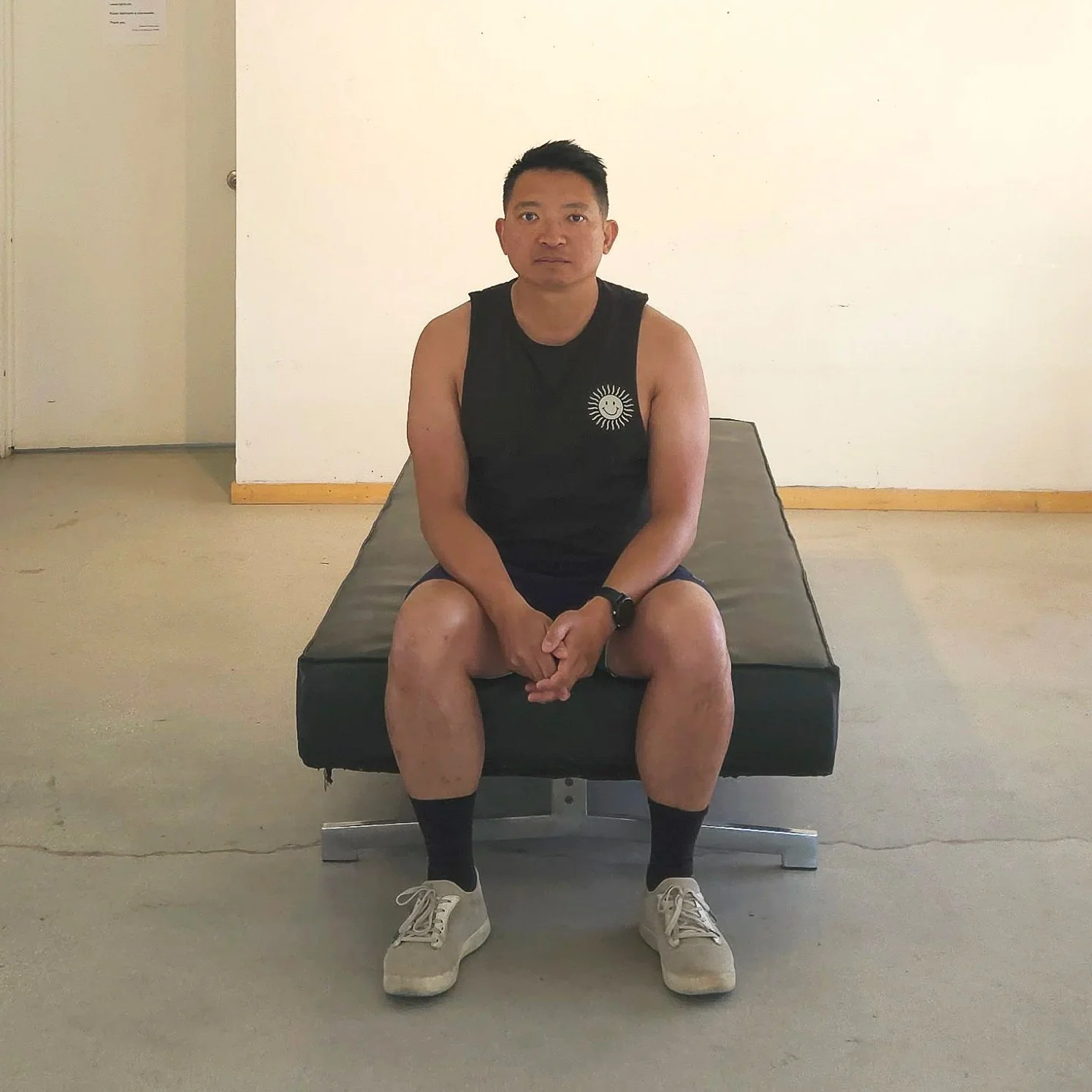
Edward FuChen Juan 阮福辰 identify as a queer Taiwanese Canadian visual artist primarily working in printmaking, papermaking, and inkmaking. His ongoing project assembles techniques on copper etching, aquatint, silkscreen, and chine-collé with handmade paper. His work focuses on the impact of human rights activism and decolonization within the Taiwanese community in Canada and Taiwan. It involves collecting oral histories, gathering knowledge, and visual documenting people and places. His intention is to experiment and create work that highlights the human rights activism and challenges between his native and adopted countries.
Presently he lives and works in Vancouver, the unceded traditional territories of the xʷməθkʷəy̓əm (Musqueam), Sḵwx̱wú7mesh (Squamish), and Sel̓íl̓witulh (Tsleil-Waututh) Nations.
Français
Edward Fu-Chen Juan 阮福辰 est un artiste visuel basé à Vancouver, en Colombie-Britannique, dans les territoires traditionnels non cédés des nations xʷməθkʷəy̓əm (Musqueam), Sḵwx̱wú7mesh (Squamish), et Sel̓íl̓witulh (Tsleil-Waututh). Il s’identifie comme un Canadien taïwanais queer avec des racines ethniques des Hakka et des Autochtones des Plaines de Taïwan. Son projet actuel porte sur l’impact du mouvement des droits humains et de la décolonisation au sein de la diaspora taïwanaise au Canada et à l’étranger. Ce travail comprend la collecte d’histoires orales ainsi que la documentation visuelle de personnes et de lieux.
Traditional-Chinese
我是個加拿大台灣同性戀藝術家 ,主要從事版畫、造紙與水墨創作。目前 ,我正在進行 結合銅版畫、水印、絲網、絹版畫與手工紙的技術。我的作品著重於人權運動和非殖民 地化對加拿大和台灣社區的影響。 這包括收集歷史與知識。
我的目標是進行實驗和創作 ,強調我的家鄉國和被領養國家之間的人權運動和挑戰。目前 ,我利用台灣和加拿大具有文化意義的植物創作版畫和紙張。我意欲探索人權運動的 視覺語言。